The Modern College Landscape: Navigating Higher Education in the 21st Century
The decision to pursue higher education is one of the most significant investments a young person or returning adult learner can make. The upside can be substantial: stronger earnings, broader career options, lower unemployment risk, and access to communities that shape a lifetime of work and thinking. The risk is real as well. Tuition, living costs, and loans can narrow choices for years after graduation. The central question is not whether college is automatically worth it, but how to pursue education strategically, minimizing cost while protecting the benefits that a well-planned college experience can provide.
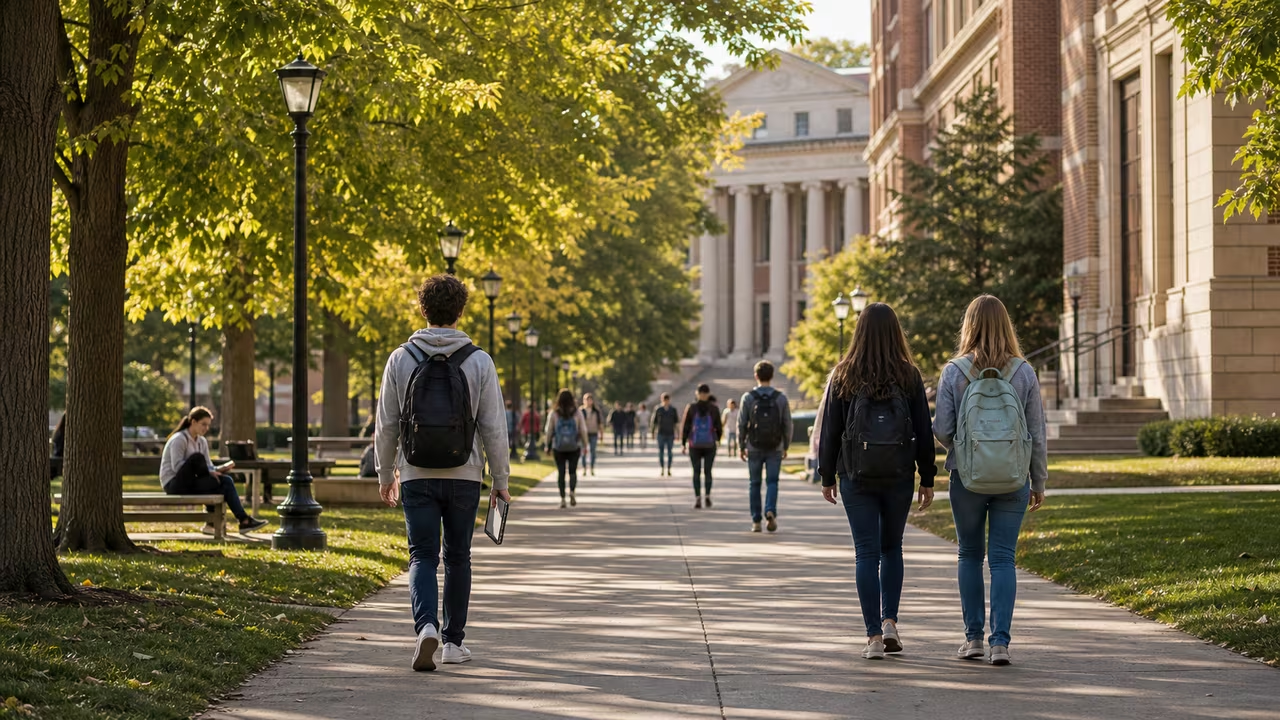
Understanding this landscape requires acknowledging fundamental shifts in how education operates. The traditional four-year residential experience, while still valuable, now competes with online degrees, competency-based programs, accelerated pathways, and hybrid models that blend in-person instruction with digital coursework. Community colleges have emerged as powerful on-ramps to bachelor's degrees, often providing identical lower-division coursework at a fraction of the cost. Meanwhile, the explosion of certifications, microcredentials, and bootcamps has created alternative pathways that, for certain careers, can rival or exceed the value of traditional degrees. Navigating these options requires clear-eyed assessment of your goals, learning style, financial situation, and the specific requirements of your intended profession.
This guidebook approaches college success as a connected set of decisions, recognizing that academic achievement, financial wellness, mental health, career preparation, and personal development are deeply interconnected. A student struggling with loan anxiety may find their focus compromised in the classroom; conversely, academic difficulties can trigger financial consequences through lost scholarships or extended time to graduation. By addressing each dimension thoughtfully and providing tools to quantify, plan, and track your progress, we aim to give you the perspective needed to manage school, money, and career planning together.
Whether you're a high school junior beginning to explore options, a parent seeking to help your child make informed decisions, a current undergraduate looking to optimize your remaining semesters, or an adult learner returning to complete an interrupted degree, this guidebook offers practical wisdom and actionable strategies. We'll explore everything from early savings strategies to graduate school considerations, from study techniques backed by cognitive science to stress management approaches that preserve your wellbeing amid academic pressures. The calculators embedded throughout turn broad concepts into personalized projections, helping you see exactly how decisions today shape outcomes tomorrow.
Education's true value extends far beyond the credential itself. The relationships forged, the intellectual habits developed, and the exposure to diverse perspectives and challenging ideas all compound throughout life in ways that resist simple quantification. Yet failing to address the practical realities of cost, time management, and career preparation can undermine even the most enriching educational experience. This guidebook honors both dimensions, treating college as both a profound personal journey and a strategic investment deserving careful planning and ongoing optimization.
Early Planning: Building Your College Savings Foundation
The power of compound interest makes early savings one of the most impactful decisions families can make regarding higher education. A family that begins saving when a child is born, contributing just $200 monthly to a tax-advantaged 529 plan earning 6% annually, will accumulate over $77,000 by the time that child turns 18, nearly enough to cover the full cost of attendance at many state universities. In contrast, a family beginning the same savings pattern at age 10 will accumulate roughly $26,000, requiring three times the monthly contribution to reach equivalent totals. This mathematical reality underscores why financial advisors consistently emphasize starting early, even with modest amounts, rather than waiting until you can "afford" larger contributions.
529 plans deserve particular attention as the primary vehicle for college savings. Named after Section 529 of the Internal Revenue Code, these state-sponsored investment accounts offer significant tax advantages: contributions grow tax-free, and withdrawals used for qualified education expenses incur no federal taxes. Many states provide additional incentives, including state tax deductions for contributions and matching grants for lower-income families. Plans typically offer age-based portfolios that automatically shift from aggressive to conservative allocations as the beneficiary approaches college age, though self-directed options exist for those preferring active management.
Beyond 529 plans, families should understand the broader financial aid landscape. The Free Application for Federal Student Aid (FAFSA) determines eligibility for federal grants, loans, and work-study programs, using a Student Aid Index (SAI) based on information supplied by the student and required contributors. Importantly, certain assets, such as retirement accounts and home equity, are generally treated differently from reportable savings and investments, which creates planning questions for families anticipating need-based aid. Understanding these nuances enables families to save effectively while positioning themselves favorably for need-based assistance.
The choice of college major represents another early consideration with profound long-term implications. Engineering and computer science graduates consistently earn premium salaries, often recouping their educational investments within five years of graduation. Humanities and social science majors, while earning less on average, report high rates of career satisfaction and frequently advance to leadership positions requiring the communication and analytical skills their studies cultivate. Healthcare fields offer exceptional job security but often require graduate education. These patterns warrant honest reflection about your interests, aptitudes, and financial priorities, ideally before committing to a specific institution or program.
College Savings Goal Calculator
Find out how much to set aside each month.
College Major Earnings Comparison Calculator
Estimate how your degree choice impacts future pay.
Exploring scholarships represents another crucial early activity. Beyond the prestigious national competitions that receive extensive media attention, thousands of smaller scholarships exist through local civic organizations, professional associations, religious institutions, and employers. Many go unclaimed each year simply because students don't apply. Creating a systematic scholarship search process, beginning in junior year of high school and continuing throughout college, can yield cumulative awards that significantly reduce borrowing needs. Essay banks, where you maintain polished responses to common prompts, enable efficient applications across multiple opportunities.
Choosing Your Path: Institution Types, Program Structures, and Fit
The American higher education system offers remarkable diversity, from intimate liberal arts colleges with fewer than 2,000 students to sprawling research universities enrolling 60,000 or more. Each institutional type provides distinct advantages. Liberal arts colleges emphasize broad intellectual development, small classes taught by professors rather than teaching assistants, and close mentorship relationships. Research universities offer access to cutting-edge facilities, renowned faculty whose discoveries shape their fields, and extensive course catalogs enabling deep specialization. Regional public universities often provide exceptional value, combining reasonable tuition with strong job placement networks in their geographic areas.
Community colleges merit special consideration as strategic starting points. Students completing associate degrees before transferring to four-year institutions graduate with the same bachelor's degrees as those who attended all four years, but with significantly less debt. Articulation agreements between community colleges and public universities guarantee transfer credit, smoothing the transition. Community colleges also serve as testing grounds for students uncertain about their academic interests or college readiness, enabling low-stakes exploration before committing to higher-cost institutions. The stigma once attached to this pathway has largely evaporated as pragmatic students and families recognize its financial wisdom.
Online and hybrid programs have matured dramatically, with respected institutions now offering fully remote degrees in fields ranging from business administration to nursing. These programs particularly benefit working adults, military personnel, and students in rural areas lacking access to traditional campuses. However, not all online programs are equal; prospective students should verify regional accreditation, investigate graduation rates, examine employer perceptions in their intended field, and honestly assess whether their learning style suits self-directed study with limited face-to-face interaction.
Fit encompasses both academic and social dimensions. A brilliant student who thrives in large, competitive environments may flounder at a small college where everyone knows everyone; conversely, a quieter student needing individual attention may feel lost in a 300-person lecture hall. Campus culture, including athletic enthusiasm, Greek life prominence, political climate, and religious character, shapes daily experience profoundly. Visiting campuses, attending admitted student events, connecting with current students through social media, and honestly reflecting on your preferences all contribute to identifying environments where you'll flourish rather than merely survive.
Geographic considerations intertwine with financial ones. In-state tuition at public universities often costs one-third to one-half what out-of-state students pay, a gap that rarely justifies crossing state lines unless a specific program offers compelling advantages. However, some states have reciprocity agreements reducing costs for regional students, and certain private institutions offer such generous aid that their net cost approaches or undercuts public alternatives. Running the numbers for each institution on your list, using net price calculators that incorporate your family's specific financial situation, reveals surprising outcomes that application sticker prices obscure.
Accelerated and competency-based programs offer intriguing alternatives for motivated students. Three-year bachelor's programs, increasingly common at innovative institutions, reduce costs by 25% while demanding more intensive coursework. Competency-based programs at schools like Western Governors University allow students to progress as quickly as they can demonstrate mastery, enabling working adults with existing knowledge to compress degree timelines dramatically. These options do not suit everyone. They sacrifice some of the exploratory breadth that traditional programs provide, but for goal-oriented students with clear career objectives, they represent compelling alternatives.
Financing Your Education: Understanding and Managing Student Loans
For most students, even those receiving substantial aid, some borrowing remains necessary to bridge the gap between family resources and college costs. Understanding the different types of loans, their terms, and their long-term implications enables informed borrowing decisions that minimize future burden. Federal loans, available through the FAFSA, offer significant protections, including income-driven repayment plans, deferment options, and potential forgiveness programs, that private loans typically lack. Exhausting federal eligibility before turning to private lenders represents a fundamental principle of sound educational borrowing.
Direct Subsidized Loans, available to undergraduates demonstrating financial need, offer the most favorable terms. The government pays interest while you're enrolled at least half-time, during grace periods, and during deferment, a benefit worth thousands of dollars over the loan's lifetime. Direct Unsubsidized Loans are available regardless of need but accrue interest immediately; students who can afford to make interest payments during school prevent capitalization that expands their principal balance. Graduate students and parents may access PLUS loans, which carry higher interest rates but enable borrowing up to the full cost of attendance minus other aid.
Private loans should generally be a last resort. They typically require creditworthy cosigners for traditional-age students lacking credit history, offer variable rates that may increase substantially over time, and provide fewer hardship protections. However, students with excellent credit or well-qualified cosigners may occasionally find private rates competitive with federal options, particularly for graduate education. Comparing specific offers, reading fine print regarding repayment terms and forbearance options, and understanding cosigner release provisions (if any) are essential before signing.
The most important borrowing principle is matching loans to expected earnings. A general rule suggests that total educational debt should not exceed expected first-year salary in your intended field. An aspiring software engineer can responsibly borrow $80,000 for a degree that opens doors to $90,000 starting positions; an aspiring social worker, whose starting salary may be $45,000, should seek to limit borrowing accordingly. This means making harder choices about institutional cost, living arrangements, and work during school, but protects against the debt burden that derails post-graduation life planning.
Student Loan Repayment Calculator
Preview monthly loan payments based on interest rates.
Student Loan Payoff Calculator
See how additional payments accelerate debt freedom.
Student Loan Forgiveness Eligibility Calculator
Check if your career path qualifies for loan relief.
Loan forgiveness programs offer hope for borrowers in qualifying fields. Public Service Loan Forgiveness (PSLF) erases remaining federal loan balances after 120 qualifying payments while working full-time for eligible nonprofit or government employers. Teacher Loan Forgiveness provides up to $17,500 for educators serving low-income schools. Income-driven repayment plans forgive remaining balances after 20-25 years of payments, though the forgiven amount may be taxable. Understanding these programs enables strategic career and repayment planning that maximizes their benefits.
Refinancing represents a post-graduation strategy worth understanding. Private lenders offer refinancing products that consolidate federal and private loans into new loans, often at lower interest rates for borrowers with strong credit and income. However, refinancing federal loans into private ones permanently surrenders federal protections. That tradeoff makes sense for some borrowers but carries real risks if income disruption occurs. Those pursuing forgiveness programs should generally avoid refinancing, as it would reset their qualifying payment count.
Mastering Academic Performance: GPA, Study Skills, and Learning Science
Academic success in college requires skills qualitatively different from those that sufficed in high school. The volume of material, pace of instruction, and level of independence demand active learning strategies that many students have never needed to develop. Understanding how memory works, including encoding, storage, and retrieval, enables study approaches aligned with cognitive science rather than intuition, which often leads students astray. The most effective learners don't simply work harder; they work strategically, leveraging techniques that research demonstrates actually work.

Spaced repetition represents perhaps the most powerful learning technique, yet few students employ it systematically. Rather than cramming material the night before exams, an approach that produces rapid forgetting, spaced repetition distributes practice across multiple sessions separated by increasing intervals. Material reviewed today, then in three days, then in one week, then in two weeks becomes durably encoded in long-term memory. Digital flashcard applications can automate this scheduling, presenting each card precisely when you're about to forget it, maximizing learning efficiency.
Active recall, the effortful retrieval of information from memory, strengthens neural pathways far more effectively than passive review. Rereading notes or highlighting textbooks feels productive but generates minimal lasting learning. Instead, closing your book and attempting to explain concepts aloud, completing practice problems without solutions visible, or writing summaries from memory forces the retrieval that consolidates knowledge. The discomfort of struggling to remember indicates that learning is occurring; fluent, effortless review often merely creates an illusion of mastery that collapses under exam pressure.
Your grade point average (GPA) represents more than a number. It opens or closes doors to graduate schools, competitive internships, scholarship renewals, and honor societies. Understanding how credits and grade points combine mathematically enables strategic course selection. Lighter semesters when major courses intensify, strategic use of pass/fail options where policies permit, and careful attention to courses that might drag down your average all contribute to GPA optimization. However, avoid letting GPA obsession prevent you from taking challenging courses that truly develop your abilities; employers and graduate schools recognize when easy A's mask intellectual timidity.
GPA Calculator
Calculate your grade point average for each term.
Time management separates successful students from those who struggle. The freedom of college schedules, lacking the structured days high school imposed, overwhelms students lacking self-discipline. Time blocking, which assigns specific hours to specific activities, creates external structure. The Pomodoro Technique, alternating focused 25-minute work periods with short breaks, maintains concentration during extended study sessions. Weekly reviews identifying what worked and what didn't enable continuous improvement rather than repeated mistakes.
Seeking help early distinguishes students who recover from academic difficulties from those who spiral downward. Office hours provide access to professors who want to see you succeed, yet most students never attend. Tutoring centers, writing centers, and peer study groups offer additional support. The key is recognizing struggle promptly rather than hoping problems resolve themselves. A C on the first exam signals need for changed approaches; a student who responds immediately can often salvage the course, while one who waits until the final faces insurmountable deficits.
Study Strategies and Time Management: Building Sustainable Academic Habits
The transition from high school to college confronts students with a paradox: despite attending fewer hours of class, the academic workload intensifies substantially. The rule of thumb suggests two to three hours of outside study for every hour of class time, meaning a 15-credit semester demands 30-45 hours of independent work weekly, essentially a full-time job atop class attendance. Students who fail to internalize this reality, treating college like high school with more freedom, quickly find themselves overwhelmed as assignments accumulate and exam dates approach.
Effective reading strategies become essential as textbook chapters and research articles proliferate. SQ3R, which stands for Survey, Question, Read, Recite, Review, provides a structured approach that enhances comprehension and retention. Before reading, survey the chapter's headings, summaries, and review questions to create a mental framework. Transform headings into questions you'll answer while reading. Read actively, annotating key points. After each section, recite the main ideas aloud without looking at the text. Review periodically to consolidate learning. These steps slow initial reading but dramatically reduce time wasted on rereading that never happened when cramming before exams.
Note-taking deserves careful consideration, as ineffective approaches waste effort while effective ones reinforce learning. The Cornell Method divides pages into sections for main notes, key questions, and summaries, creating built-in review opportunities. Concept mapping connects ideas visually, revealing relationships that linear notes obscure. Recording lectures (with permission) provides review opportunities, though transcription should supplement rather than replace active listening. Digital notes offer searchability and organization; handwritten notes, research suggests, enhance encoding through the kinesthetic act of writing. Most students benefit from experimenting with multiple approaches to discover their personal optimum.
Certification preparation extends beyond degree coursework for many students, particularly in technology, finance, and healthcare fields. Professional certifications, from CompTIA for IT fundamentals to CPA for accountancy, can enhance employability and sometimes command salary premiums. These exams require structured preparation distinct from academic coursework, often involving self-study with commercial preparation materials. Breaking comprehensive exam objectives into daily study sessions, tracking progress systematically, and scheduling practice exams to assess readiness mirrors effective approaches for academic finals as well.
Certification Study Planner
Break large topics into manageable daily study sessions.
Reading Time Calculator
Estimate how long textbooks or articles will take to finish.
Flashcard Retention Decay Calculator
Schedule review sessions before you forget key facts.
Procrastination afflicts nearly every student at some point, and understanding its psychology enables effective countermeasures. Procrastination often stems not from laziness but from task aversion, the discomfort an assignment evokes. Perfectionism, fear of failure, and overwhelm trigger avoidance behaviors that provide immediate relief but create larger problems later. Recognizing these patterns enables targeted interventions: breaking intimidating tasks into small, specific actions; committing to just five minutes of work, which often leads to continued effort; forgiving yourself for past procrastination rather than compounding guilt that worsens the cycle.
Physical environment profoundly impacts study effectiveness. The brain forms context-dependent memories, meaning locations associated with studying prime the mind for focus. Designating specific spaces for academic work, such as a library carrel, a quiet cafe, or a cleared desk, creates environmental cues that facilitate concentration. Conversely, studying in bed associates that space with wakefulness, potentially disrupting sleep. Minimizing digital distractions through website blockers, phone placement in another room, or airplane mode creates the sustained attention that deep learning requires.
Wellness and Mental Health: Thriving Beyond Academics
College mental health has emerged as a critical concern, with rates of anxiety, depression, and other conditions rising substantially among student populations. The pressures of academic performance, social adjustment, financial stress, and an uncertain job market converge during developmentally significant years when young adults are still forming their identities and coping mechanisms. Institutions have expanded counseling services in response, but demand often exceeds capacity, making proactive self-care and early help-seeking essential for maintaining wellbeing throughout the college experience.
Sleep represents the foundation upon which all other wellness dimensions rest, yet college culture often treats sleep deprivation as a badge of honor. The research is clear: sleep-deprived students perform worse academically, retain less information, and exercise poorer judgment. That is the opposite of what all-nighters are supposed to accomplish. Seven to nine hours nightly enables the memory consolidation that transforms studying into lasting learning. Consistent sleep schedules, even on weekends, synchronize circadian rhythms that regulate energy, mood, and cognitive function throughout the day.
Sleep debt, the cumulative deficit from inadequate rest, impairs function in ways students often fail to recognize. After several nights of six-hour sleep, cognitive performance declines to levels comparable to legal intoxication, yet subjective sleepiness plateaus, creating dangerous overconfidence in impaired abilities. Recovery requires extended sleep over multiple nights; a single long sleep cannot repay substantial debt. Students tracking their sleep patterns often discover correlations between rest and academic performance that motivate changed behaviors more effectively than abstract warnings.
Sleep Debt Calculator
Track how much rest you owe your body during busy weeks.
Mindfulness Break Scheduler
Plan short pauses to recharge focus and reduce stress.
Work-Life Balance Score Calculator
See if your schedule needs more downtime or social time.
Stress management techniques deserve deliberate cultivation during college years, establishing habits that serve throughout life. Mindfulness meditation, even brief daily practice, rewires stress response systems, reducing reactivity and improving emotional regulation. Exercise releases endorphins, improves sleep, and provides structured breaks from academic work. Social connection, which college environments facilitate naturally, buffers against isolation's harmful effects. Students who proactively build these protective factors weather difficulties that destabilize peers lacking such resources.
Work-life balance in college means recognizing that productivity has diminishing returns and that recovery enables rather than impedes achievement. Students who schedule leisure as restoration, not merely as a reward for finished work, sustain performance across entire semesters rather than burning out before finals. Hobbies, clubs, intramural sports, and creative outlets provide meaning beyond grades, developing whole persons who bring diverse experiences to careers and relationships. The most successful students paradoxically appear less stressed than struggling peers, having learned that sustainable effort outperforms frantic intensity.
Knowing when to seek professional help represents crucial health literacy. Persistent sadness or anxiety lasting more than two weeks, difficulty functioning in daily activities, substance use to cope with stress, or thoughts of self-harm all warrant professional consultation. College counseling centers provide free, confidential services specifically designed for student populations. Online therapy platforms expand access for those preferring remote options. The stigma once attached to mental health treatment has diminished substantially; seeking help is increasingly recognized as a strength rather than a weakness.
Living on a Student Budget: Practical Financial Management
Beyond tuition and fees, the cost of living during college often surprises students and families: housing, food, transportation, textbooks, and personal expenses. These costs vary dramatically by location, institution type, and lifestyle choices, but they typically represent 30-50% of total college costs. Managing them effectively frees resources for experiences that enhance education while minimizing borrowing for expenses that don't directly advance academic goals.
Housing decisions significantly impact both finances and experience. On-campus residence halls, while convenient and socially rich, often cost more than nearby apartments, particularly after freshman year when housing requirements typically end. Shared apartments with roommates can reduce per-person costs substantially, though lease obligations and utilities add complexity. Living at home while attending nearby institutions eliminates housing costs entirely, though sacrificing some independence and campus engagement. Each option involves trade-offs that individuals must weigh against their circumstances and priorities.
Roommate relationships, whether in dorms or apartments, require navigation skills that benefit from explicit attention. Discussing expectations around guests, cleaning, noise, and shared expenses before problems arise prevents conflicts that sour living situations. Expense-splitting applications ensure fair division of shared costs such as utilities, groceries, and household supplies without awkward calculations. Students who invest in roommate communication often find these relationships becoming some of their most enduring college friendships.
Co-Living Expense Splitter
Divide rent and utilities fairly with housemates.
Transit Pass Savings Calculator
Compare unlimited ride passes to single fares or parking fees.
Textbook Rental vs Purchase Calculator
Decide whether buying or renting each textbook saves more money.
Transportation costs accumulate significantly for students with cars. Parking permits, insurance, fuel, and maintenance often total hundreds of dollars monthly. Many campuses provide free or subsidized transit passes, making car ownership unnecessary for students whose needs center on campus. Bike-sharing programs, e-scooters, and walking can handle most daily travel in compact college towns. Students who resist the independence narrative that cars represent often discover that forgoing car ownership is the single easiest budget improvement available.
Textbook costs, while declining with digital options and open educational resources, still surprise students accustomed to provided high school materials. Strategies for minimizing these costs include: waiting until the first class session to confirm required materials (some professors list books they never assign); purchasing previous editions that differ minimally from current ones; renting rather than buying books you won't reference after the course; sharing textbooks with classmates in staggered sections; using library reserve copies for occasional reference needs; and exploring international editions that contain identical content at lower prices.
Building credit during college establishes financial foundations for post-graduation life, when apartments, car loans, and eventually mortgages will require credit history. A student credit card, used for small purchases and paid in full monthly, builds credit while teaching discipline. Authorized user status on a parent's account provides history without independent responsibility. The key is using credit sparingly as a tool rather than as access to money you do not have. Many students learn that distinction only after accumulating high-interest consumer debt alongside their educational loans.
Career Preparation: Building Your Professional Foundation
The ultimate purpose of most college education, regardless of field, is preparation for meaningful and remunerative work. Yet many students treat career preparation as something that happens after graduation rather than an integral thread woven throughout their educational experience. This approach squanders opportunities that exist uniquely during college years: internship pipelines, on-campus recruiting, faculty networks, and career services designed specifically for student populations. The result can be post-graduation scrambling that could have been avoided.

Internships have become virtual requirements for competitive entry-level positions in most fields. They provide practical experience that classroom learning cannot fully replicate, professional networks that facilitate job searches, and résumé credentials that distinguish you from peers with equivalent academic records. Paid internships are preferable and increasingly common; unpaid internships, while sometimes valuable, raise ethical concerns and may violate labor laws unless structured carefully. The best internships lead directly to job offers, making them effectively extended interviews that determine post-graduation outcomes.
Skills development should be intentional and documented throughout college. Technical skills specific to your field, such as programming languages, laboratory techniques, statistical software, and design tools, obviously matter. But transferable skills consistently rank higher in employer surveys: communication, teamwork, problem-solving, leadership, and time management transcend specific roles and industries. Seeking opportunities that develop these abilities, then articulating them clearly in applications and interviews, positions you as a prepared professional rather than a naive new graduate.
Understanding skills gaps enables strategic development during remaining college time. Students often discover that roles they desire require capabilities their curriculum does not provide. A business major seeking marketing roles might need digital analytics skills, or an engineering student pursuing management might need communication development. Identifying these gaps early enables coursework selection, extracurricular choices, or self-directed learning that closes them before entering the job market.
Career Skills Gap Analyzer
Spot areas where additional courses or certifications could boost your resume.
Job Offer Comparison Calculator
Weigh salary, benefits and cost-of-living for multiple offers.
Coding Bootcamp ROI Calculator
Evaluate specialized training programs before you commit time and money.
Networking, despite its uncomfortable connotations, simply means building genuine relationships with people in your field. Professors who know your work provide recommendations and industry connections. Alumni in your desired field offer informational interviews that illuminate career paths and hiring processes. LinkedIn enables targeted outreach that previous generations lacked. The key is approaching networking as relationship-building rather than transactional extraction, offering genuine interest in others' experiences, following up thoughtfully, and seeking to help others when you can.
Career services offices remain underutilized resources on most campuses. They provide resume reviews, interview coaching, job and internship listings, employer information sessions, and career fairs that create opportunities students might not discover independently. Building relationships with career counselors early, not just before graduation, enables ongoing guidance as your interests and opportunities evolve throughout college. Many offer alumni services as well, extending their support beyond graduation when it may be most needed.
Planning for Graduate School: Advanced Degrees and Their Economics
For many careers, including medicine, law, academia, and certain engineering and scientific fields, graduate education is either required or provides substantial advantages. However, advanced degrees represent significant investments of time and money, with opportunity costs that include foregone earnings during years of continued study. Making informed decisions about graduate education requires honest assessment of your field's requirements, your career goals, and the specific programs you might pursue.
PhD programs in STEM fields typically provide full tuition coverage plus modest living stipends through teaching or research assistantships. Students essentially earn while they learn, though stipends often leave graduates with modest lifestyle expectations for five to seven years. Humanities PhD funding varies more, with full funding at top programs but partial or no funding at lower-ranked institutions. That can be a signal that doctoral training in these fields may not be advisable without full support. Academic job markets have tightened substantially across most fields, making non-academic career paths increasingly important considerations for prospective doctoral students.
Professional degrees in law, medicine, and business typically involve substantial debt. Law school tuition has risen dramatically while legal job markets have fluctuated, making career outcomes more variable than in previous generations. Medical education, while expensive, leads to high-earning specialties that can justify debt for students committed to the field. MBA programs range from part-time options enabling continued employment to full-time programs at elite institutions that serve as career accelerators for consulting and finance paths. Each requires careful analysis of specific programs, typical outcomes, and alignment with personal goals.
Timing of graduate education involves strategic considerations. Some fields benefit from immediate continuation after undergraduate work while academic skills and habits remain fresh. Others favor work experience first, which provides context that enriches graduate learning and better signals for competitive admissions. Employer tuition assistance programs enable graduate study while working, though balancing employment and education demands extraordinary time management. Financial considerations differ substantially based on timing as well, including savings accumulated during working years, family obligations, and opportunity costs.
PhD Completion Time Estimator
Gauge how long your doctoral journey could last.
Scholarship ROI Calculator
Compare award amounts to projected tuition and future earnings.
International Moving Cost Estimator
Budget for relocation if graduate school takes you abroad.
International graduate study attracts many students seeking specific expertise, global experience, or more affordable options. European universities often charge lower tuition than American counterparts, while programs in Asia and other regions offer unique specializations. However, international education involves currency considerations, visa complexities, credential recognition issues, and adjustment challenges that compound those of domestic transitions. Students considering international options should research thoroughly, including conversations with alumni who navigated the specific transition they contemplate.
Graduate school preparation ideally begins years before application. Competitive programs seek students with research experience, strong faculty recommendations, and records demonstrating capability for advanced work. Undergraduate research assistantships, honors theses, and independent projects build credentials that admissions committees value. Standardized tests such as the GRE, GMAT, LSAT, and MCAT require preparation time that should not be squeezed into busy senior-year schedules. Application timelines extend a full year before enrollment, meaning students planning post-graduation graduate study should begin active preparation in junior year or earlier.
Alternative Pathways: When Traditional College Isn't the Right Fit
While this guidebook focuses on traditional higher education, honesty requires acknowledging that college is not the right path for everyone, at least not immediately or in conventional forms. Skilled trades offer excellent earning potential without degree requirements; electricians, plumbers, and HVAC technicians earn median salaries exceeding many college graduates while training through apprenticeships that pay rather than cost. Entrepreneurship, though risky, has created more billionaires than any degree program. Military service provides training, experience, and educational benefits that fund subsequent education on favorable terms.
Coding bootcamps have emerged as compelling alternatives for students seeking technology careers without four-year degrees. These intensive programs, typically lasting 12-24 weeks, develop practical programming skills that employers increasingly value alongside or even instead of computer science degrees. Quality varies substantially; prospective students should investigate job placement rates, typical starting salaries, and alumni networks before committing tuition often ranging from $10,000-20,000. For students with aptitude for technology and discipline for intensive self-directed learning, these programs can provide exceptional returns on relatively modest investments.
Gap years, intentional pauses between high school and college, provide time for exploration, maturation, and savings that many students lack when proceeding directly to higher education. Structured gap year programs offer international experience, community service, and personal development. Working full-time for a year provides savings that reduce borrowing needs while building work ethic and practical perspective. Students who take gap years often return to academics with clarity and motivation that enhance their eventual college performance.
Adult learners returning to complete interrupted education face distinct challenges and opportunities. Life experience provides perspective that traditional students lack; many adult learners become academic stars once family, financial, or motivational barriers that originally interrupted their education are addressed. Competency-based programs particularly benefit adults who have learned through work and life experiences that traditional coursework would redundantly cover. Support services for adult learners increasingly recognize this population's specific needs, including childcare referrals, flexible scheduling, and academic reorientation.
The credential landscape continues evolving in ways that may eventually challenge traditional degrees' dominance. Microcredentials, digital badges, and industry certifications provide targeted validation of specific skills. Portfolio-based hiring enables demonstration of abilities without formal credentials. Employer-provided training, particularly at technology companies, can substitute for formal education for talented individuals who demonstrate capability through alternative means. Students should pursue degrees with awareness that the signaling function credentials provide may continue shifting in coming decades.
Your College Success Action Plan: Bringing It All Together
The breadth of topics this guidebook covers can feel overwhelming, but successful college navigation doesn't require perfecting every dimension simultaneously. Rather, it means building awareness of the interconnected systems that shape educational outcomes, then addressing the most pressing priorities for your specific situation while maintaining adequate attention to others. What follows is a framework for translating guidebook insights into actionable personal planning.
For prospective students and families still in planning phases, immediate priorities center on financial preparation and institutional selection. Maximize savings contributions to tax-advantaged accounts; every dollar saved is a dollar not borrowed at interest. Research institutions rigorously, moving beyond rankings to examine specific programs, outcomes for students like you, and net costs after aid. Visit campuses and speak with current students to assess fit that matters beyond statistics. Apply broadly, as admission can be unpredictable and broader options create negotiating leverage for financial aid.
For current students in early years, focus shifts to academic foundation and career exploration. Master study techniques that cognitive science validates; the habits you build now will serve throughout your education and career. Explore broadly through general education requirements, remaining open to discovering passions you didn't anticipate. Begin career preparation through internship exploration, skills development, and relationship-building with faculty who might become references. Monitor finances to ensure you're on track, adjusting lifestyle if borrowing exceeds reasonable levels.
For students in later years, intensity appropriately shifts toward career launch and transition planning. Pursue capstone internships or experiences that position you for post-graduation employment. Strengthen professional networks and activate job search processes well before graduation. Make decisions about graduate education based on thorough research rather than default continuation. Begin loan repayment planning, understanding income-driven options and forgiveness possibilities. Prepare mentally and practically for the substantial life transition graduation represents.
Regardless of your stage, certain practices serve everyone: prioritize sleep and wellness as foundations for sustainable performance; seek help early when difficulties emerge; build genuine relationships with peers, faculty, and professionals; maintain financial awareness through regular budget review; approach college as both investment and experience, honoring practical necessities while embracing intellectual and personal growth opportunities that justify education's true value.
Your college path is uniquely yours, shaped by circumstances, choices, and chance encounters that no guidebook can fully anticipate. But the patterns of success are recognizable: intentional planning, strategic resource allocation, help-seeking behavior, balance between challenge and self-care, and continuous adaptation as circumstances evolve. By engaging with the tools and perspectives this guidebook offers, you equip yourself to navigate complexity with confidence, transforming the substantial investment of college into returns that compound throughout a lifetime of learning, earning, and meaningful contribution.