The Joy and Art of Home Cooking
There is something deeply satisfying about transforming raw ingredients into a nourishing meal. The sizzle of aromatics hitting hot oil, the aroma of bread rising in the oven, and the colorful mosaic of vegetables arranged on a cutting board all engage our senses in ways few other daily activities can match. Yet for many, the kitchen feels more like a source of stress than joy, fraught with uncertainty about recipes, timing, and budgets.
This guidebook exists to change that. Whether you are a complete beginner who struggles to boil water or an experienced home cook looking to refine your techniques, you will find practical wisdom and interactive tools to make cooking more approachable, more efficient, and more enjoyable. The goal is not perfection but progress: building confidence one meal at a time until the kitchen becomes your favorite room in the house.
Home cooking offers benefits that extend far beyond the plate. Financially, preparing meals at home costs roughly one-fifth what restaurant dining or takeout would for equivalent nutrition. Health-wise, you control every ingredient, avoiding the excess sodium, sugar, and processed additives that characterize most convenience foods. Environmentally, home cooking generates less packaging waste and allows you to source ingredients more consciously. And socially, cooking for family and friends strengthens bonds in ways that ordering delivery never can.
The calculators woven throughout this guide address the practical challenges that trip up even motivated cooks: How do I scale a recipe for more guests? What is the actual cost per serving of this dish? How long will these leftovers stay safe? By answering these questions with personalized numbers, you can focus on the creative and enjoyable aspects of cooking rather than worrying about math and logistics.
Think of this guidebook as a conversation with a knowledgeable friend who happens to love food. We will explore the fundamentals of recipe development, the art of efficient meal preparation, smart shopping strategies, essential food safety practices, flavor pairing principles, kitchen equipment considerations, and advanced cooking techniques. Along the way, you will discover that great cooking is less about innate talent and more about understanding a few key concepts and having the right tools to put them into practice.
The kitchen rewards attention more than bravado. A pan that is properly heated, a knife that is sharp, a sauce tasted before it reaches the table, and vegetables cut to the same size will do more for dinner than complicated tricks. Cooking gets easier when you learn which details matter.
The Building Blocks of Great Meals
Every cuisine in the world, from French haute cuisine to humble street food, relies on the same fundamental building blocks: the interplay of salt, fat, acid, and heat. Understanding these elements gives you a framework for creating delicious food regardless of the specific recipe you are following, or whether you are following a recipe at all.
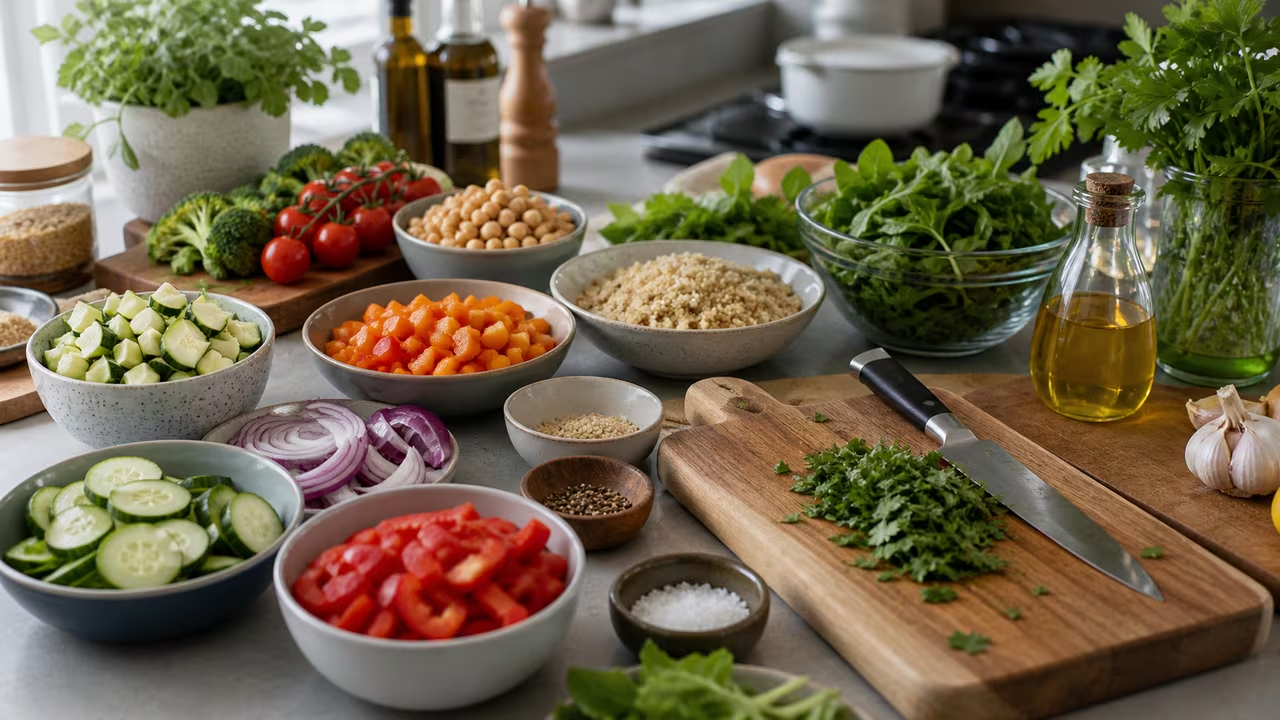
Salt does far more than make food taste salty. It enhances natural flavors, balances bitterness, and even affects texture by drawing out moisture or helping proteins retain water. The key is layering salt throughout cooking rather than adding it only at the end. Salt your pasta water until it tastes like the sea; season proteins before cooking; taste and adjust throughout the process. With practice, you will develop an intuitive sense for the right amount.
Fat carries flavor and creates satisfying textures: the crispness of a properly seared steak, the silkiness of a well-emulsified vinaigrette, the richness of butter melting into fresh bread. Different fats suit different purposes: neutral oils for high-heat cooking, olive oil for finishing and Mediterranean dishes, butter for sauces and baking, animal fats for traditional preparations. Quality matters; good olive oil and grass-fed butter taste noticeably better than commodity versions.
Acid brightens and balances, cutting through richness and adding dimension to flat-tasting dishes. A squeeze of lemon transforms a heavy dish; a splash of vinegar brings salad dressing to life; pickled vegetables provide counterpoint to fatty meats. When a dish tastes good but somehow dull, acid is often what is missing. Keep lemons, limes, various vinegars, and fermented condiments stocked for easy access.
Heat is the catalyst that transforms raw ingredients into finished dishes. Understanding how different heat levels affect food gives you control over outcomes: low and slow for tough cuts that need tenderizing, high and fast for searing and caramelization. Residual heat continues cooking food after it leaves the pan, so accounting for carryover prevents overcooking. Temperature is objective; invest in an instant-read thermometer to remove guesswork from proteins and baked goods.
Beyond these fundamentals, great cooking requires attention to texture contrasts (crispy with creamy, chewy with tender), temperature contrasts (warm proteins with cool garnishes), and visual appeal (color, height, negative space on the plate). These elements elevate home cooking from mere sustenance to genuine pleasure.
Perfecting Recipes: Scaling, Costing, and Converting
Recipes are starting points, not rigid prescriptions. Learning to adapt them for different serving sizes, dietary needs, and ingredient availability transforms you from a recipe follower into a confident cook who can handle whatever situation arises. The challenge is maintaining proper proportions when scaling. Doubling a recipe is rarely as simple as doubling every ingredient.
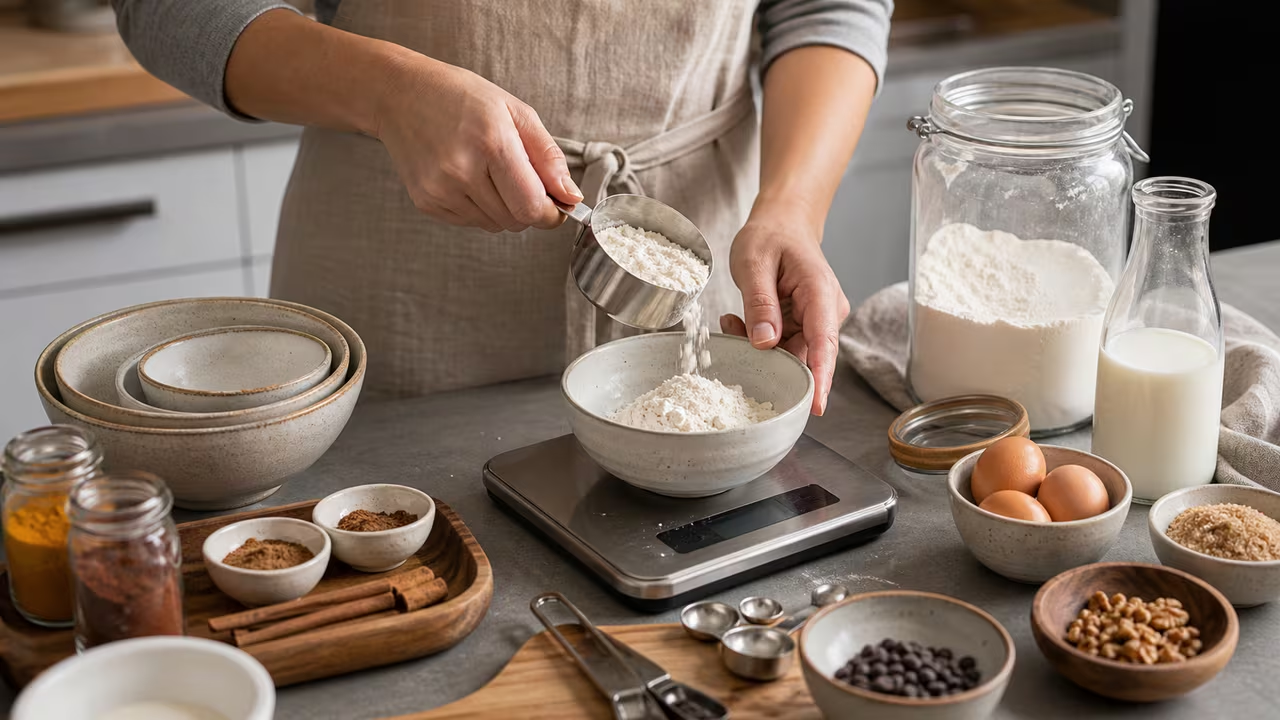
Scaling recipes requires understanding which components scale linearly and which do not. Most ingredients, including proteins, vegetables, and starches, scale proportionally with serving size. Aromatics like garlic, onions, and spices often need less than proportional increases when scaling up, since their flavors concentrate during cooking. Leavening agents in baking require careful calculation because too much can cause collapse. Cooking times also change with batch size; larger quantities take longer to heat through and may require adjustments to prevent burning.
Understanding recipe costs empowers smarter decisions about what to cook and where to splurge. That elegant dinner party dish may cost less per serving than your everyday chicken preparation once you break down ingredient expenses. Conversely, some seemingly cheap meals become expensive when you account for rarely used specialty ingredients. Tracking cost per serving over time reveals patterns that help optimize your food budget without sacrificing quality or variety.
Measurement conversions between volume and weight, metric and imperial, frequently trip up home cooks. Professional bakers weigh ingredients for precision, while most home recipes use volume measures that vary with how you scoop flour or pack brown sugar. Knowing conversions, such as a cup of all-purpose flour weighing about 125 grams and a tablespoon equaling three teaspoons, prevents errors and enables you to use recipes from any source. Investing in a kitchen scale eliminates much of this confusion entirely.
Recipe Scaling Calculator
Adjust ingredient amounts proportionally when cooking for more or fewer people than the original recipe intended.
Recipe Cost and Nutrition Calculator
Calculate the true cost per serving and nutritional content of any dish to make informed meal choices.
Cooking Measurement Calculator
Convert between cups, tablespoons, grams, ounces, and other common cooking units with precision.
Meal Planning and Prep: The Secret to Sustainable Home Cooking
The difference between people who consistently cook at home and those who default to takeout often comes down to planning. Without a system, the daily question of what is for dinner becomes exhausting, and the path of least resistance leads to ordering out. With a simple framework for weekly planning and strategic prep, home cooking becomes the easier choice.
Effective meal planning starts with understanding your household's actual rhythms. Which nights are hectic with activities? When do you have time for more elaborate cooking? Who will be home for which meals? Build your plan around reality rather than aspiration. Schedule quick meals for busy nights, save complex recipes for relaxed weekends, and designate at least one leftover night to clear the refrigerator.
The concept of ingredient overlap transforms meal planning from burden to efficiency. Plan dishes that share base ingredients. A whole chicken yields roast chicken dinner one night, chicken salad for lunches, and stock from the carcass for soup later in the week. Buying larger quantities of fewer items reduces waste, simplifies shopping, and develops deeper familiarity with ingredients. You will learn to see three dinners in a pork shoulder rather than just one.
Batch cooking amplifies your kitchen time. Spending two or three hours on Sunday preparing components, including washed and chopped vegetables, cooked grains, marinated proteins, and sauces, means weeknight dinners come together in minutes rather than starting from scratch. This is different from eating the same meal repeatedly; you are preparing building blocks that combine into different dishes throughout the week.
The meal kit phenomenon has introduced many people to home cooking who might otherwise never have tried. These services offer convenience and variety but at significant premium over grocery shopping. Understanding the true cost comparison, including the value of your time, helps determine whether meal kits make sense for your situation or whether the same benefits can be achieved more economically through smarter planning.
Similarly, comparing meal prep costs against takeout or restaurant dining puts concrete numbers behind what you might intuitively sense: home cooking saves substantial money. The comparison goes beyond dollars. Homemade meals typically contain less sodium, fewer additives, and more vegetables. Portions are more appropriate. And the act of preparing food creates a different relationship with what you eat than passive consumption does.
Meal Plan Calorie Tracker
Design weekly menus that meet your dietary goals while maintaining variety and enjoyment.
Meal Kit Subscription Cost Comparison Calculator
See whether meal delivery services save or cost money compared to planning and shopping yourself.
Meal Prep vs Takeout Cost Calculator
Compare the weekly and annual savings of cooking at home versus ordering restaurant food.
Smart Grocery Shopping: Maximizing Value and Minimizing Waste
The grocery store is where good intentions meet reality. Without strategy, shopping trips become expensive, exhausting, and wasteful. With a systematic approach, you can dramatically reduce spending while actually improving the quality of what you eat. The key is shifting from impulse purchasing to intentional buying based on your meal plan.
Unit price comparison is the most powerful tool in a smart shopper's arsenal. That larger package may look more expensive on the shelf tag, but the cost per ounce often tells a different story. Bigger is not always better; buying in bulk only saves money if you actually use the product before it spoils or goes stale. Calculate true value by considering how much you will realistically consume.
Store layout is designed to maximize your spending. Fresh produce at the entrance appeals to your aspirational self; staples like dairy and bread are at the back, forcing you past tempting displays. End caps featuring sale items often are not the best deals. Navigate with intention: stick to the perimeter for whole foods, venture into center aisles only for specific items on your list, and resist the checkout line's candy and magazine gauntlet.
Seasonal shopping aligns taste, nutrition, and value. Produce at peak season costs less because supply is abundant, tastes better because it is picked ripe rather than shipped unripe, and offers higher nutritional value than out-of-season alternatives. Learning what is in season becomes easier with practice; your farmers market provides the most reliable guide. When favorites are abundant and cheap, consider preserving through freezing, canning, or pickling.
Food waste represents both financial and ethical loss. American households throw away roughly 30 percent of purchased food, equivalent to tossing money directly into the garbage. Planning purchases around what you will actually cook, understanding date labels (which usually indicate quality rather than safety), using the first-in-first-out principle, and finding creative uses for scraps all reduce waste. Vegetable trimmings become stock; stale bread transforms into breadcrumbs or croutons; overripe fruit makes excellent smoothies or baked goods.
Building a well-stocked pantry enables spontaneous cooking without constant shopping. Shelf-stable basics such as oils, vinegars, canned tomatoes, dried pasta, rice, dried beans, and spices provide a foundation that fresh ingredients can build upon. Pantry meals become your fallback when plans change. Rotate stock to use older items first and replace what you consume promptly.
Grocery Unit Price Calculator
Identify the best value among different package sizes by comparing cost per unit weight or volume.
Zero-Waste Grocery Planner
Create shopping lists designed to minimize leftovers, spoilage, and food waste throughout the week.
Food Safety and Storage: Keeping Your Kitchen Healthy
Food safety may seem like an afterthought until someone in your household experiences foodborne illness. Then the importance becomes viscerally clear. Understanding how pathogens spread and how to prevent contamination protects everyone who eats your cooking and enables you to be more flexible with leftovers and batch cooking rather than anxiously discarding perfectly good food.
The danger zone between 40 and 140 degrees Fahrenheit is where bacteria multiply most rapidly. Food should spend as little time as possible in this range. Thaw frozen items in the refrigerator rather than on the counter. Refrigerate cooked foods within two hours of cooking (one hour if ambient temperature exceeds 90 degrees). When reheating, bring food to 165 degrees throughout to kill any bacteria that developed during storage.
Cross-contamination spreads pathogens from raw proteins to ready-to-eat foods. Use separate cutting boards for raw meat and produce. At minimum, wash thoroughly with hot soapy water between uses. Store raw proteins on the lowest refrigerator shelf where drips cannot contaminate other foods. Wash hands for at least 20 seconds with soap after handling raw meat, eggs, or their packaging.
Understanding date labels prevents both food waste and safety risks. Sell by dates are for store inventory management, not consumer safety. Best by and use by dates indicate quality peaks, not expiration. Most foods remain safe well beyond these dates if properly stored, though quality may decline. Use your senses: look, smell, and when appropriate taste to assess whether food is still good. When in doubt, throw it out; but informed doubt discards less than paranoid doubt.
Proper storage extends shelf life dramatically. Refrigerators should maintain 40 degrees or below; freezers, 0 degrees or below. Store ethylene-producing fruits (apples, bananas, avocados) separately from ethylene-sensitive vegetables (lettuce, broccoli, carrots). Keep herbs like cut flowers in water in the refrigerator. Store potatoes and onions in cool, dark, dry places, but not together, as gases from onions accelerate potato sprouting.
Mastering leftover management transforms batch cooking from risky to reliable. Label containers with contents and date. Consume refrigerated leftovers within three to four days. Freeze what you will not eat in time, noting that quality declines over months even if safety is maintained. Reheat thoroughly and enjoy the fruits of your earlier labor.
Brine Calculator
Mix the ideal salt-to-water ratio for tender, flavorful, and safely prepared meats and vegetables.
Leftover Pizza Reheat Calculator
Restore yesterday's pizza to crispy, melty perfection with calculated time and temperature settings.
Spice Shelf Life Tracker
Monitor when your seasonings lose potency so you always cook with vibrant, flavorful spices.
Flavor Pairing and Creative Substitutions
Great cooks develop an intuitive sense for what flavors work together. This is not magic but pattern recognition built through experience and understanding of a few key principles. Learning these principles accelerates the journey from recipe follower to confident improviser who can create delicious dishes from whatever is on hand.
Complementary flavors share aromatic compounds, which is why certain combinations recur across cuisines: tomato and basil, apple and cinnamon, pork and sage. Contrasting flavors create interest through opposition: salty and sweet (prosciutto and melon), spicy and cooling (hot wings and blue cheese), rich and acidic (avocado and lime). Building dishes with both complementary and contrasting elements creates complexity that keeps palates engaged.
The flavor wheel concept from professional culinary training groups ingredients by shared aromatic profiles. Foods in the same segment, such as the nutty/toasted family, work well together. Foods in opposite segments provide contrast. Even without memorizing formal categories, paying attention to which ingredients share aromatic qualities helps you make intuitive substitutions and pairings.
Successful substitution requires understanding what role an ingredient plays. Is it providing structure (flour in baking), moisture (eggs in cakes), flavor (vanilla extract), or texture (chopped nuts)? Once you identify the function, you can find alternatives that serve the same purpose. Applesauce can replace oil in quick breads by providing moisture. Greek yogurt can stand in for sour cream in sauces. Mashed banana can substitute for some of the sugar in certain recipes.
Allergies and dietary restrictions drive much substitution necessity. Gluten-free baking requires understanding how gluten provides structure and finding alternatives, often combinations of rice flour, tapioca starch, and xanthan gum. Dairy-free cooking has become easier as plant-based alternatives have improved. Egg substitutes vary depending on whether eggs are providing binding (flax eggs work well), leavening (vinegar and baking soda), or richness (aquafaba from chickpea liquid).
A well-stocked pantry enables substitution on the fly. Running out of one ingredient need not derail a meal when you understand equivalents. White wine and lemon juice can substitute for rice vinegar. Mayonnaise and yogurt are often interchangeable in dressings. Chicken and vegetable broths can swap in most applications. The more you cook, the more fluent you become in this substitution language.
Ingredient Substitute Ratio Calculator
Find measured alternatives when you run out of an ingredient or need to accommodate dietary restrictions.
Baking Pan Converter
Adjust recipes for different cake, casserole, or baking dish sizes without sacrificing results.
Wine Fermentation Schedule Calculator
Time homemade wines to reach peak flavor for pairing with your special occasion meals.
Essential Kitchen Tools and Equipment
A well-equipped kitchen makes cooking easier and more enjoyable. Equipment accumulation can spiral into cluttered cabinets full of single-purpose gadgets that seemed essential at the time. The wisest approach focuses on versatile, high-quality basics that handle most tasks superbly, supplemented with specialized tools only for techniques you actually use regularly.
Sharp knives matter more than any other tool. A quality chef's knife, a paring knife, and a serrated bread knife handle nearly every cutting task. Keep them sharp. A dull knife requires more force, making slips more likely and cuts less clean. Learn basic knife skills: the rocking chop, the claw grip for protecting fingers, the proper way to carry a knife. Time invested in knife proficiency pays dividends in every cooking session.
Heavy-bottomed cookware distributes heat evenly, preventing hot spots that burn food. A good stainless steel skillet excels at searing and deglazing. A cast iron pan provides excellent heat retention for steaks and cornbread. A nonstick pan makes eggs and fish effortless. A heavy Dutch oven handles everything from braises to bread baking. These four pieces, plus a couple of saucepans, cover most stovetop needs.
The instant-read thermometer removes guesswork from proteins. Forget imprecise tests like pressing meat to check doneness; temperature is objective. A quality probe thermometer costs less than one ruined roast and lasts for years. Use it not just for food safety but for hitting precise doneness targets, such as medium-rare at 130 degrees instead of "cooked until it looks done."
Consider energy consumption when choosing cooking methods and appliances. That air fryer may seem like a redundant gadget, but for small-batch cooking it uses far less energy than heating a full oven. Slow cookers efficiently simmer all day. Pressure cookers dramatically reduce cooking times. Understanding the energy implications of your equipment choices supports both budget and environmental goals.
Maintenance extends equipment life dramatically. Season and properly care for cast iron to build a natural nonstick surface that improves with use. Hand-wash good knives rather than letting the dishwasher dull them. Store cookware properly to prevent scratches. Clean appliances according to manufacturer instructions. Well-maintained equipment performs better and lasts longer.
Slow Cooker Energy Cost Calculator
See how much power your slow cooker and other countertop appliances consume during typical use.
BBQ Propane Usage Calculator
Plan fuel needs for backyard grilling sessions and estimate ongoing costs of outdoor cooking.
Air Fryer vs Oven Energy Calculator
Compare energy costs and cooking performance between different methods for the same dish.
Advanced Techniques: Precision and Mastery
Once you have mastered the basics, advanced techniques open new dimensions of flavor and texture. These methods, from sous vide to fermentation to high-altitude adjustments, require more precision but reward you with restaurant-quality results at home. The calculators in this section help you navigate the variables that make advanced cooking successful.
Sous vide cooking revolutionized professional kitchens and has become increasingly accessible for home cooks. By sealing food in bags and cooking in precisely temperature-controlled water, you achieve edge-to-edge consistency impossible through traditional methods. A steak cooked sous vide reaches exactly your target temperature throughout, then gets quickly seared for a flavorful crust. The technique excels for proteins but also transforms vegetables, eggs, and even desserts.
Temperature and time interact in sous vide cooking. Lower temperatures require longer times to achieve the same results. A thick steak needs more time than a thin one. The precision removes guesswork but requires understanding the variables. Our calculators help you determine optimal time and temperature combinations for your specific ingredients and desired outcomes.
High altitude cooking presents challenges that frustrate unprepared cooks. Water boils at lower temperatures as elevation increases, affecting cooking times for boiled and simmered foods. Leavening agents become more powerful in thinner air, potentially causing baked goods to rise too fast and collapse. Adjusting recipes for altitude requires systematic modifications that our calculator helps quantify.
Dough hydration, the ratio of water to flour, fundamentally affects bread texture. Higher hydration yields open, airy crumb structures with large holes; lower hydration produces tighter, more uniform textures. Professional bakers think in baker's percentages, expressing all ingredients as ratios to flour weight. Understanding this system enables you to adjust recipes for different styles and to troubleshoot problems systematically.
Fermentation adds complexity to foods through microbial transformation. From simple yogurt to elaborate kimchi, fermented foods develop flavors impossible to achieve through cooking alone while often providing probiotic benefits. Temperature, time, and salt concentration control fermentation pace. Home fermentation requires attention to these variables but rewards you with unique products impossible to buy.
Precision extends to other techniques as well. Candy making requires hitting exact temperature stages. Cheese making depends on precise pH measurements. Even everyday tasks like caramelizing onions benefit from understanding the Maillard reaction and how temperature affects browning. The more you understand the science, the more control you gain over outcomes.
Sous-Vide Cooking Time Calculator
Select temperature and protein thickness to calculate precise timing for perfectly cooked results.
High Altitude Cooking Time Adjuster
Modify simmering, boiling, and baking times for mountain climates where air pressure affects cooking.
Dough Hydration Calculator
Balance flour and water ratios to achieve desired bread textures from dense to airy.
Cooking for Special Occasions and Crowds
Feeding a crowd amplifies both the rewards and challenges of home cooking. The satisfaction of hosting a successful dinner party or holiday gathering lingers in memory; so does the stress of timing multiple dishes or running out of food. Scaling up requires different strategies than everyday cooking, but the same principles of planning and preparation apply with higher stakes.
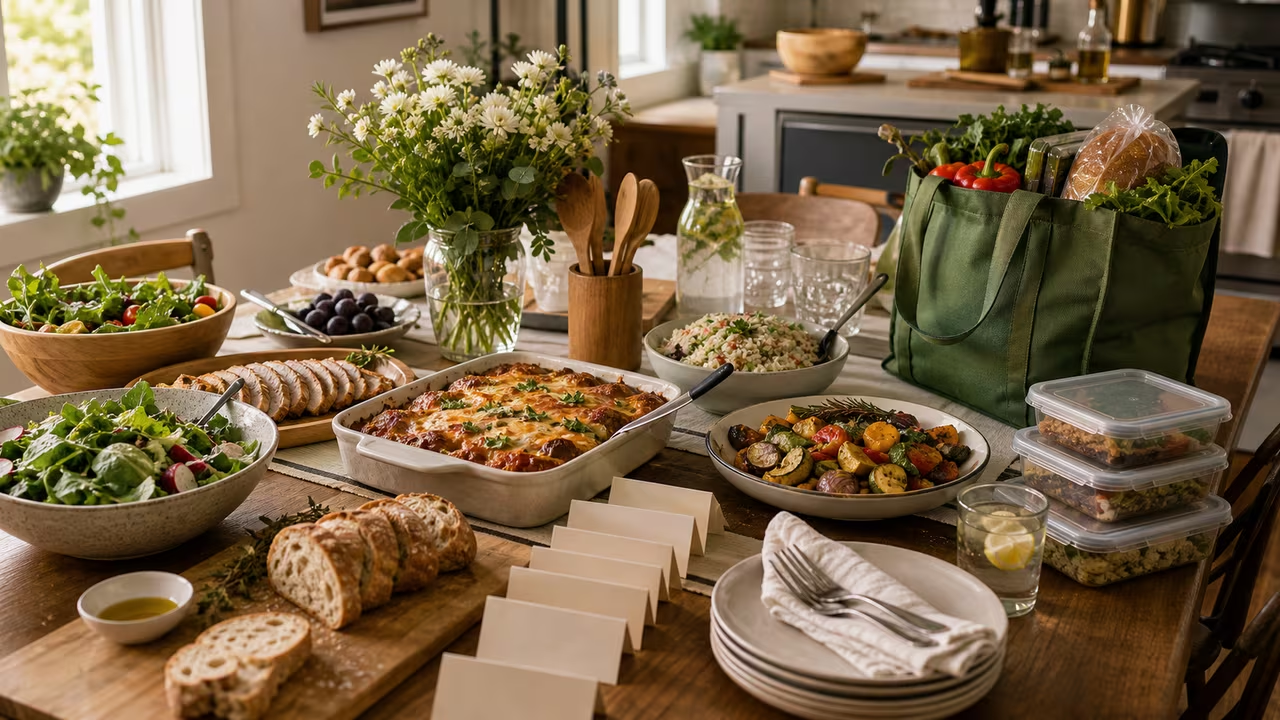
Menu planning for groups should balance ambition with realism. Choose one or two dishes that require last-minute attention; everything else should be done ahead or require minimal intervention. Consider dietary restrictions before finalizing the menu rather than scrambling to accommodate them later. Plan the timeline backward from serving time, building in buffers for things that inevitably take longer than expected.
Scaling recipes for larger groups introduces complexities beyond simple multiplication. Cooking times change with batch size. Seasonings may need adjustment since flavor concentration does not scale linearly. Equipment capacity becomes a constraint. Can your oven hold enough roasting pans? Work through logistics before shopping to avoid discovering limitations mid-preparation.
Buffet-style service simplifies large gatherings by removing the coordination challenge of plating multiple portions simultaneously. Guests serve themselves at their own pace, reducing pressure on the host. The key is maintaining safe holding temperatures. Use chafing dishes, warming trays, or slow cookers for hot items; beds of ice for cold items. Monitor and refresh dishes as needed throughout the event.
Potluck gatherings distribute the cooking burden but require coordination to avoid ending up with seven pasta salads and no main dishes. As host, assign categories or specific items to ensure balance. Communicate any dietary restrictions guests should accommodate. Provide serving utensils since most people forget them. Label dishes with ingredients to help guests navigate allergies.
Holiday cooking traditions carry emotional weight that everyday meals do not. The pressure to replicate Grandmother's stuffing exactly or to outdo last year's feast can overwhelm. Remember that the gathering matters more than perfection. Accept help graciously. Prepare what you can in advance. And consider whether some traditions have outlived their purpose. Sometimes simplifying the menu improves the holiday for everyone.
Becoming a Better Cook: Continuous Learning
Cooking skill develops through practice, reflection, and exposure to new ideas. The most accomplished home cooks remain students, always curious about unfamiliar cuisines, techniques, and ingredients. This growth mindset transforms mistakes from failures into learning opportunities and keeps cooking interesting across decades of daily practice.
Taste everything, constantly. Taste ingredients before cooking to understand their raw qualities. Taste during cooking to track how flavors develop. Taste before serving to make final adjustments. The feedback loop between palate and pan is how you develop intuition. When something does not taste right, try to identify what is missing: salt, acid, fat, sweetness, or something else entirely.
Keep a cooking journal to track what works and what does not. Note modifications you made to recipes and whether they improved outcomes. Record which dishes family members loved and which sat ignored. Over time, patterns emerge that guide future cooking. You might discover that you consistently under-salt, or that your oven runs hot, or that your family prefers one-pot meals to composed plates.
Expand your repertoire systematically. If you always cook Italian, try Japanese. If you rely on the stovetop, explore your oven's capabilities. Master one new technique or ingredient each month. Challenge yourself with a dish that intimidates you. Often the fear exceeds the actual difficulty. Each expansion adds tools to your repertoire that combine in unexpected ways.
Learn from diverse sources. Cookbooks from accomplished chefs explain not just recipes but the thinking behind them. YouTube channels demonstrate techniques that words cannot fully convey. Cooking with friends or family from different backgrounds transmits cultural knowledge that books miss. Even restaurant meals can be educational when you analyze what makes them work and consider how to adapt ideas for home.
Embrace the reality that not every meal will be excellent. Some will be merely adequate; a few will outright fail. These disappointments sting but also teach. What went wrong? Could you have caught the problem earlier? What would you do differently next time? The cook who has never ruined a dish has not taken enough risks to grow.
Most importantly, cook with joy. The kitchen should not feel like an obligation but an opportunity for creativity, for nurturing others, and for the simple pleasure of making something with your hands. When cooking becomes drudgery, step back and rediscover what drew you to it initially. Try a simpler approach, cook something purely for yourself, or take a break entirely. Sustainable home cooking comes from love, not discipline.
Bookmark these calculators and return to them as your cooking journey evolves. The questions you ask will change as your skills develop: How do I scale this recipe? How can I optimize my meal prep system? What is the ideal hydration for this bread style? The tools will be here to support you at every stage, transforming kitchen challenges into culinary confidence.