The Art and Science of Home Renovation
A home is more than walls, floors, and a roof. It is the backdrop of daily life, the setting where memories are made, the sanctuary where we retreat from the world's demands. When that setting no longer serves your needs, whether because of growing families, changing tastes, deteriorating conditions, or simply the desire for something better, renovation offers the opportunity to reshape your environment without the upheaval of moving. Done well, a home makeover increases both daily quality of life and long-term property value. Done poorly, it becomes a source of stress, regret, and financial strain.
The difference between a successful renovation and a disastrous one rarely lies in the final choices of paint colors or cabinet styles. It lies in the planning that precedes those decisions. Before a single tool touches your walls, you need clear understanding of your goals, realistic assessment of your budget, accurate measurement of your needs, and honest evaluation of what you can accomplish yourself versus what requires professional expertise. This guidebook walks you through each of these considerations systematically, with calculators that quantify abstract decisions and reveal hidden costs.
Home renovation involves a peculiar kind of optimism bias. We imagine the finished kitchen gleaming in afternoon light, not the three weeks of eating takeout with dust coating everything. We picture the expanded master bathroom, not the moment when demolition reveals rotten subfloor requiring thousands in unexpected repairs. By understanding the full arc of renovation, including the inevitable surprises, you can prepare emotionally and financially for the journey, not just the destination.
The calculators embedded throughout this guide serve as reality checks on your enthusiasm. They translate your vision into numbers: gallons of paint needed, board feet of lumber required, monthly payments on renovation loans, years until energy upgrades pay for themselves. Numbers do not dampen dreams; they discipline them, ensuring that what you imagine can actually be built within your constraints. The most beautiful renovation is one you can afford to complete.
Good renovation planning is an act of translation. It turns a feeling, such as "this room should work better," into measurements, scopes, trades, materials, lead times, and contingency. The more clearly you translate the dream before demolition, the less likely the project is to start making expensive decisions for you.
Whether you are contemplating a single-room refresh or a whole-house transformation, whether your budget stretches into six figures or scrapes together a few thousand dollars, the principles in this guidebook apply. Scale your ambitions to your resources, sequence your projects strategically, and use every tool available to make informed decisions. Your future self, living in your completed space, will thank you for the care you take now.
Creating a Smart Budget: The Foundation of Success
Every renovation disaster shares a common origin: inadequate budgeting. Sometimes the initial budget was unrealistic, based on wishful thinking rather than actual costs. Sometimes the budget was reasonable but lacked contingency for inevitable surprises. Sometimes scope creep, the gradual expansion of project ambitions, consumed funds meant for completion. Whatever the cause, running out of money mid-renovation leaves you with half-finished spaces, depleted savings, and the stress of an incomplete home.
A smart renovation budget begins with ruthless honesty about your financial situation. Not what you could theoretically spend if everything goes perfectly, but what you can genuinely afford while maintaining emergency reserves and other financial obligations. The 50/30/20 rule of personal finance, 50% to needs, 30% to wants, 20% to savings, should not be suspended because you are excited about new countertops. If the renovation requires touching emergency funds or taking on debt that strains monthly cash flow, the project is too ambitious for current circumstances.
Once you establish your absolute maximum, work backward to determine scope. Get multiple detailed quotes for your envisioned project before committing. These quotes reveal market reality: what contractors actually charge, what materials actually cost, what timeline actually works. If quotes exceed your maximum, reduce scope rather than stretching budget. A beautifully finished kitchen renovation is better than a half-finished kitchen-and-bathroom attempt that exhausts funds before completion.
Contingency reserves are non-negotiable, not optional padding to be optimistically eliminated. For cosmetic renovations in homes under twenty years old, plan for 10-15% contingency. For structural work or homes with unknown conditions behind walls, 20-25% contingency is prudent. For major renovations in older homes, 30% contingency prevents catastrophe. What hides behind finished surfaces often requires updating when exposed: plumbing, wiring, framing, and insulation. Discovering knob-and-tube wiring during a kitchen renovation means that an electrical upgrade becomes mandatory, not optional.
Financing options for renovations include home equity loans, HELOCs (home equity lines of credit), personal loans, credit cards (rarely advisable for large amounts), and cash reserves. Each has different interest rates, tax implications, and repayment structures. The renovation loan calculator helps you understand monthly payment obligations before you commit, ensuring that the beautiful new space does not come with payments that compromise other life goals.
Home Renovation Budget Calculator
Forecast expenses for every stage, from demolition through finishing touches, with built-in contingency planning.
Renovation Loan Payment Estimator
Calculate monthly payments and total interest for various loan amounts and terms before borrowing.
Selecting Materials and Finishes: Balancing Beauty, Durability, and Cost
Material selection is where renovation dreams meet physical reality. The tile you saw in a magazine, the hardwood from your friend's house, and the paint color that looked perfect on Pinterest all have to be translated into specific products, quantities, and expenditures. The gap between what you imagine and what you can afford often requires creative problem-solving, but smart material choices can yield beautiful results at various price points.
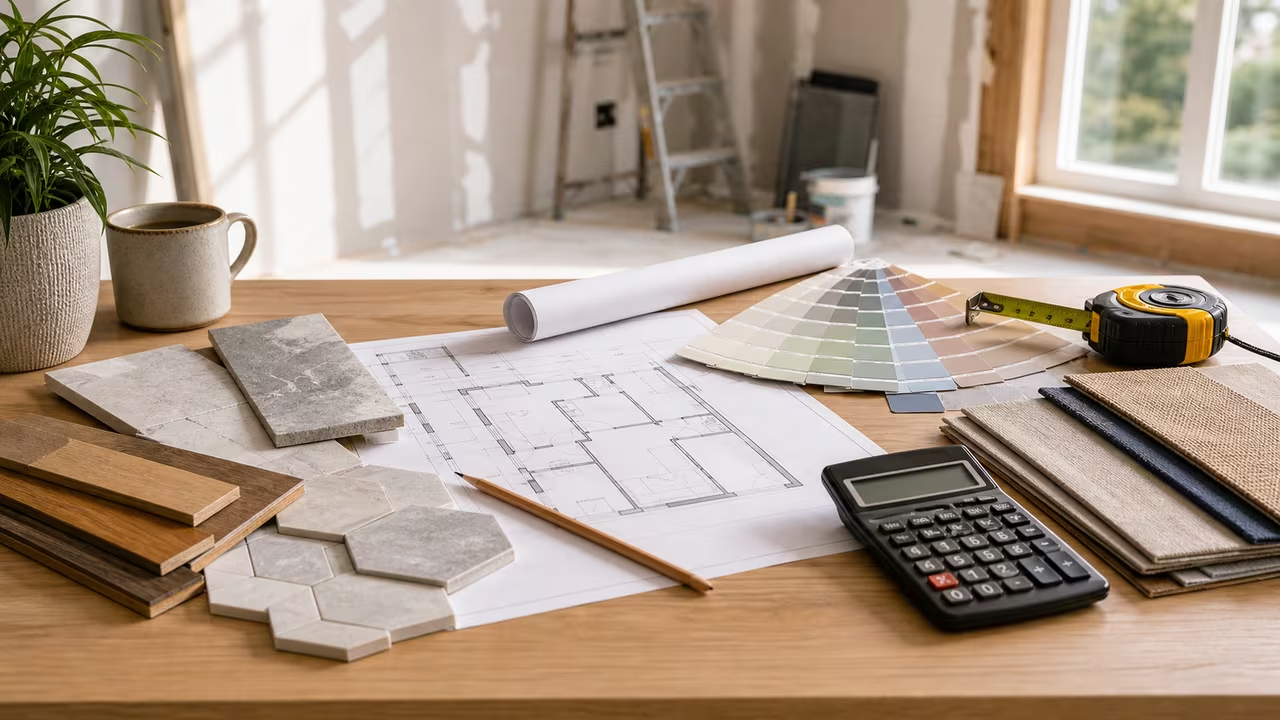
Quality in materials follows a diminishing returns curve. The difference between the cheapest option and mid-grade is usually substantial and visible; the difference between mid-grade and premium is often subtle and primarily about status or specific performance characteristics. A solid mid-grade tile will look beautiful for decades; the premium upgrade might offer marginally better appearance or slightly easier maintenance, but often not enough to justify double the price. Save premium spending for focal points that justify the investment, and use quality mid-grade materials for everything else.
Durability matters more than initial appearance in high-traffic areas. The gorgeous light-colored grout that shows beautifully in showrooms will look dingy within months in an entryway or kitchen. The exotic hardwood that dents easily might be a poor choice for a home with children and pets, however beautiful it appears in the warehouse. Ask suppliers about performance in conditions matching your actual use case, not showroom conditions. Reviews from homeowners with similar lifestyles reveal more than manufacturer specifications.
Paint, despite being among the most affordable finish materials, dramatically affects room perception. Color, sheen, and quality all matter. Higher-quality paints cover better, last longer, and are easier to clean, often justifying their premium over bargain options. Getting quantity right requires accurate calculation of wall area, accounting for windows and doors. Too little paint means inconvenient extra trips; too much wastes money on unused gallons. The paint calculator prevents these common errors.
Flooring represents one of the largest material expenses in most renovations and one of the most impactful on daily experience. You walk on floors constantly; their feel underfoot, their sound when walked upon, their maintenance requirements, and their appearance all affect livability. Consider not just the per-square-foot cost of materials but also installation costs, underlayment requirements, and lifetime maintenance expectations. A floor that costs less initially but requires replacement in ten years is more expensive than one that costs more but lasts thirty.
Paint Coverage Estimator
Calculate exactly how many gallons you need for walls and ceilings, accounting for doors, windows, and multiple coats.
Flooring Cost Calculator
Compare different flooring materials and see how your choice impacts overall budget with accurate quantity estimates.
Upgrading for Energy Efficiency: Investments That Pay Dividends
Renovation provides the perfect opportunity to improve your home's energy performance. When walls are already open, adding insulation costs a fraction of doing it separately later. When updating kitchens and bathrooms, energy-efficient fixtures add minimally to project cost while reducing utility bills for years. When replacing windows for aesthetic reasons, choosing high-performance glass yields ongoing savings. The key is understanding which efficiency upgrades offer genuine payback and which are more about environmental virtue than financial return.

Insulation improvements typically offer the best return on investment for energy upgrades, particularly in older homes with inadequate existing insulation. Heat moves through the path of least resistance; dramatically increasing resistance in one area, like walls, while leaving other areas weak, like the attic, yields disappointing results. A comprehensive approach that seals air leaks, insulates the attic to recommended R-values, and upgrades wall insulation where accessible delivers the largest utility bill reductions. The insulation savings calculator helps you estimate annual energy cost reductions against upgrade costs.
Windows are often oversold as efficiency upgrades. Yes, high-performance windows perform better than old single-pane units. Windows represent a relatively small portion of a typical home's thermal envelope, so dramatic energy savings claims often exaggerate. Replace windows when they are damaged, difficult to operate, or aesthetically obsolete, not primarily for energy savings. When you do replace them, choose well-performing options, but do not expect them to transform utility bills. The window heat loss calculator provides realistic expectations.
Lighting has undergone a revolution in the past decade. LED bulbs use a fraction of the electricity of incandescent and last vastly longer, making the upgrade economically compelling even without renovation. If your renovation involves electrical work, ensure all fixtures are LED-compatible and consider integrated LED fixtures for areas where you want permanent solutions. The payback period for LED conversion is typically under two years, making it among the fastest-returning efficiency investments.
Beyond individual measures, consider your renovation as an opportunity to improve the home as a system. The building envelope (walls, roof, windows, foundation), HVAC equipment, and occupant behavior interact. A highly efficient furnace in a leaky house wastes most of its efficiency; a tight house with an oversized HVAC system cycles inefficiently and controls humidity poorly. Think holistically about how your renovation affects the overall energy picture, not just the individual component being upgraded.
Insulation Savings Calculator
Estimate annual energy savings and payback period from upgraded insulation in walls, attic, or floors.
Lighting Upgrade Savings Calculator
Compare LED options and calculate how quickly energy savings offset purchase costs.
Window Heat Loss Savings Calculator
Understand realistic energy impacts of window replacement to set appropriate expectations.
Planning Your Renovation Timeline: Sequencing for Success
Renovation proceeds through phases that must occur in specific order. Demolition precedes construction. Rough work (framing, electrical, plumbing) precedes finish work (drywall, paint, flooring). Permits and inspections gate progress between phases. Understanding this sequence and the dependencies within it enables realistic timeline planning and prevents the chaos of discovering you cannot install cabinets because the electrical rough-in was never inspected.
Professional contractors schedule based on subcontractor availability, material lead times, and inspection requirements. A kitchen renovation might require electricians, plumbers, HVAC technicians, drywall installers, painters, flooring installers, cabinet installers, and countertop fabricators. Each trade has its own schedule and dependencies on preceding work. Coordinating these trades is a skill that experienced general contractors develop over years; it is also one of the primary challenges facing DIY renovators.
DIY renovation timelines consistently expand beyond initial estimates. What professionals accomplish in days takes weekends and evenings when fitting around work schedules. Learning curves for unfamiliar tasks add time. Tool acquisition, return trips to hardware stores for forgotten items, and mistakes requiring correction all stretch durations. Doubling your initial estimate for DIY time is often still optimistic. The DIY timeline planner helps you develop more realistic expectations based on typical task durations and your available work hours.
The sequence of renovation should also consider livability during the project. Bathroom renovations mean no access to those facilities for their duration. Kitchen renovations mean cooking becomes difficult or impossible. Whole-house projects may render the home unlivable, requiring temporary housing arrangements (and associated costs). Plan which spaces you can sacrifice temporarily and sequence work to minimize simultaneous disruption to essential functions.
Return on investment should influence prioritization when you have multiple renovation goals and limited resources. Some improvements add more value than their cost; others add less. Kitchen and bathroom updates typically return the most; luxury additions like pools often return the least. If you might sell within the next several years, prioritize improvements that appeal to future buyers. If you are staying long-term, prioritize what matters most to your daily life. The ROI calculator helps you evaluate which projects deliver the greatest value increase relative to cost.
DIY Renovation Timeline Planner
Estimate how long each task will realistically take based on complexity and your available work hours.
Home Renovation ROI Calculator
Analyze which improvements add the most value relative to their cost to prioritize your project list.
Strengthening Structure and Weatherproofing: Protecting Your Investment
Behind the finishes you see and touch lies the structure that keeps everything standing and protected from the elements. These systems, including foundation, framing, roofing, and waterproofing, are unglamorous but essential. Neglecting them to fund prettier upgrades is false economy; structural problems worsen over time and can destroy the value of everything built upon them. When renovation exposes structural elements, evaluate their condition and address deficiencies before covering them back up.
Water is the great enemy of buildings. It rots wood, rusts steel, cracks concrete through freeze-thaw cycles, and enables mold growth. Basement waterproofing, proper grading around foundations, functioning gutters and downspouts, and intact roofing form the waterproofing system that keeps your home dry. When any component fails, water intrusion begins, often hidden behind finished surfaces until damage becomes severe. The cost-benefit of waterproofing improvements depends on local conditions, existing problems, and potential damage from flooding. The waterproofing calculator helps you evaluate.
Roofing condition affects everything below it. A failing roof allows water intrusion that damages framing, insulation, wiring, drywall, and finishes throughout the house. If your renovation budget allows, and your roof is aging, addressing roofing before interior work prevents the tragedy of new interiors being damaged by leaks months after completion. In snow country, roof structure must support snow loads; the calculator helps you evaluate whether your roof framing is adequate or requires reinforcement.
Soundproofing, while not structural in the load-bearing sense, relates to wall and floor construction and is most easily addressed during renovation when surfaces are already being opened or replaced. Adding mass-loaded vinyl, resilient channels, or additional drywall layers during a renovation costs a fraction of retrofitting these measures later. If noise from adjacent rooms, floors above, or outdoor sources affects quality of life, consider soundproofing investments while renovation work provides access.
Structural improvements rarely show directly in home value appraisals the way kitchen updates do, but they protect the value of everything else. A beautiful kitchen in a house with foundation problems is worth far less than the same kitchen with a sound foundation. Think of structural work as the minimum viable investment that must precede discretionary aesthetic improvements.
Basement Waterproofing Cost-Benefit Calculator
Weigh waterproofing system costs against potential flood damage to make informed protection decisions.
Roof Snow Load Calculator
Determine if your roof structure can handle local snow accumulation or requires reinforcement.
Home Soundproofing ROI Calculator
Evaluate the quality-of-life and potential value benefits of reducing noise transmission between spaces.
Smart Technology and Solar Power: Modern Upgrades for Future Living
Technology has transformed what homes can do. Smart thermostats learn your schedule and optimize heating and cooling. Connected lighting adjusts to time of day and occupancy. Solar panels generate electricity from your roof, reducing or eliminating utility bills. Battery storage provides backup during outages. These technologies, once exotic luxuries, have become mainstream options that merit serious consideration during renovation planning.
Smart home automation's value lies primarily in convenience and modest energy savings. Smart thermostats reduce heating and cooling costs by 10-15% for most households, paying for themselves within a few years. Smart lighting, sensors, and controls add convenience but yield smaller savings. The home automation calculator helps you estimate realistic energy reductions from various smart technologies so you can evaluate them as investments rather than just gadgets.
Solar panels represent a more significant investment with potentially substantial returns. The economics depend heavily on local electricity rates, available sunlight, utility policies for net metering, available incentives, and your home's suitability for panels (roof orientation, shading, condition). In favorable circumstances, solar can provide effective returns exceeding traditional investments while insulating you from electricity rate increases. In unfavorable circumstances, it may never pay back. The solar payback calculator incorporates these factors to estimate your specific situation.
Battery storage adds resilience to a solar installation, enabling use of solar power after sunset and providing backup during grid outages. Batteries remain expensive relative to their capacity, making economic payback challenging in most markets. Their value is primarily in backup power and the ability to maximize self-consumption of solar generation rather than exporting to the grid at low rates. The battery calculators help you size systems appropriately and estimate how long backup power will last during outages.
When planning any electrical upgrades, consider future needs. Electric vehicle adoption is accelerating, and EV charging infrastructure is easier to install during renovation than as a retrofit. Heat pump technology is improving, potentially making electric heating competitive with gas in coming years. Adequate electrical panel capacity for these future loads costs little to install during renovation but much more to upgrade later. Think ahead about how your home's electrical system might need to evolve.
Home Automation Energy Savings Calculator
Estimate realistic energy reductions from smart thermostats, sensors, and automated systems.
Solar Panel Payback Calculator
Analyze whether solar makes financial sense for your specific situation based on rates and incentives.
Solar Battery Bank Calculator
Size battery storage appropriately for your solar system and backup power needs.
Home Battery Backup Duration Calculator
Estimate how long your battery backup will sustain essential loads during grid outages.
Optimizing Heating and Cooling: Comfort Through Every Season
Heating and cooling systems consume more energy than any other component of typical homes, often 40-50% of total utility costs. They also profoundly affect daily comfort: a system that cannot maintain temperature on extreme days, that creates hot and cold spots, that cycles too frequently, or that produces excessive noise diminishes quality of life regardless of how beautiful the finishes are. HVAC performance deserves serious attention in any renovation, whether or not you are explicitly updating mechanical systems.
Proper sizing is the foundation of HVAC performance. Undersized systems struggle on extreme days, running constantly without achieving comfort. Oversized systems short-cycle, failing to run long enough to properly dehumidify and causing temperature swings. Proper sizing requires load calculations based on your home's specific characteristics: size, insulation levels, window area, and orientation. Rules of thumb or simple replacement matching are not enough. The cooling load calculator performs these calculations so you can specify appropriately sized equipment.
Ductwork is the often-neglected component of forced-air systems. Leaky ducts lose conditioned air before it reaches living spaces, wasting energy and creating comfort problems. Poorly designed ducts create pressure imbalances, making some rooms too hot and others too cold. Undersized ducts restrict airflow, reducing system efficiency and capacity. When renovation provides access to ductwork, evaluate its condition and design. The duct sizing calculator helps you determine appropriate dimensions for optimal airflow.
Heat pumps have become increasingly attractive alternatives to traditional furnaces. Modern heat pumps can provide both heating and cooling efficiently, reducing the need for separate systems. Air-source heat pumps work well in mild to moderate climates; cold-climate heat pumps now perform effectively even in sub-zero temperatures. Ground-source heat pumps offer the highest efficiency but at significantly higher installation cost. The heat pump comparison calculator helps you evaluate whether heat pump technology makes sense for your situation.
Window performance affects cooling loads directly through solar heat gain and heating loads through conductive losses. Strategic window placement, shading (through overhangs, trees, or blinds), and glass selection all influence how hard your HVAC system must work. When planning renovations that affect windows, whether adding them, moving them, or replacing them, consider their thermal performance alongside aesthetics and natural lighting. The window heat loss calculator quantifies these impacts.
HVAC Cooling Load Calculator
Calculate the air conditioning capacity needed to maintain comfort on the hottest days.
HVAC Duct Size Calculator
Design duct runs for balanced airflow, quiet operation, and optimal system efficiency.
Heat Pump vs Furnace Savings Calculator
Compare annual operating costs between heat pumps and traditional furnaces for your climate.
Designing Inviting Outdoor Spaces: Extending Your Living Area
Living space need not stop at your walls. Decks, patios, porches, and gardens extend usable area into the outdoors, providing space for relaxation, entertaining, dining, and play. In favorable climates, well-designed outdoor spaces see heavy use for much of the year, effectively increasing your home's living area at lower cost per square foot than interior additions. Even in challenging climates, screened porches, covered patios, or fire pits extend the comfortable outdoor season.

Deck construction involves significant structural considerations. Decks must support their own weight plus the weight of occupants, furniture, and potential snow loads while resisting the elements year after year. Materials range from pressure-treated lumber (economical but requires maintenance) through composites (higher cost but low maintenance) to exotic hardwoods (premium appearance and durability at premium prices). The lumber calculator helps you estimate material needs and costs for various decking options.
Green roofs, rooftops planted with vegetation, offer multiple benefits: they reduce stormwater runoff, provide insulation, create habitat, extend roof membrane life, and add beauty. However, they impose significant loads that roofs must be designed to carry, and they require drainage systems, waterproofing, and appropriate plant selection. The green roof calculators help you evaluate structural requirements, stormwater benefits, and potential savings on stormwater fees (in municipalities that offer them).
Landscaping improvements, while often overlooked in renovation planning, can dramatically affect property value and enjoyment. Mature trees provide shade that reduces cooling costs. Proper grading directs water away from foundations. Native plantings reduce maintenance and water requirements. Outdoor living areas extend entertaining space. Consider landscaping as part of your overall renovation plan, not an afterthought addressed with whatever budget remains.
Outdoor structures, such as pergolas, gazebos, sheds, and outdoor kitchens, add function and visual interest to yards. Like interior construction, they require planning, permits, and often professional execution for anything beyond simple projects. Factor these additions into your overall budget and timeline rather than treating them as separate projects that compete for resources with interior work.
Lumber and Decking Calculator
Calculate board counts, fastener needs, and costs for deck construction with various materials.
Green Roof Load Calculator
Determine if your roof structure can support a green roof or requires reinforcement.
Green Roof Rain Retention Calculator
Estimate how much stormwater a vegetated roof can absorb and retain.
Green Roof Stormwater Savings Calculator
Calculate potential savings on stormwater fees from green roof installation.
DIY vs. Professional: Knowing When to Call for Help
The DIY renovation movement has empowered countless homeowners to improve their spaces while saving money. With tutorials available for nearly any project, tools more accessible than ever, and genuine satisfaction in building with your own hands, doing it yourself holds undeniable appeal. Wisdom lies in recognizing the line between suitable DIY projects and those that genuinely require professional expertise, a line that depends on both the task and your specific skills.
Some work should never be attempted by amateurs. Electrical work beyond simple fixture swaps risks electrocution and fire. Structural modifications can compromise building integrity. Gas line work risks explosion and carbon monoxide poisoning. Plumbing errors cause water damage that can total in tens of thousands of dollars. Permits and inspections exist for these trades because the consequences of errors are severe. Even if you are confident in your abilities, many jurisdictions require licensed contractors for such work regardless of who does it.
Cosmetic work, including painting, flooring installation, trim carpentry, tile setting, and wallpapering, generally suits DIY execution if you have patience, attention to detail, and willingness to learn. These tasks require skill but not licenses, and mistakes, while frustrating, do not endanger safety or cause catastrophic damage. Time investment often exceeds professional timelines substantially, but cost savings can be significant for those with more time than money.
A hybrid approach often works well: hire professionals for rough work requiring permits and inspections, then DIY finish work once skilled trades are complete. Having electricians and plumbers handle infrastructure while you do painting, flooring, and trim saves money without compromising safety. Just ensure your timeline accounts for the interfaces between professional and DIY phases.
Opportunity cost deserves consideration alongside direct costs. Time spent on renovation cannot be spent earning income, caring for family, or enjoying leisure. If your professional income far exceeds what you save through DIY, and you value your limited free time, hiring professionals may be the more economical choice despite higher direct costs. The calculation is personal, depending on your income, time availability, skill level, and whether you enjoy hands-on work.
Bringing Your Vision to Life
A successful home renovation requires the convergence of vision, planning, resources, and execution. The vision emerges from your sense of how you want to live, not how magazines suggest you should live, and from how your family actually uses space. The best projects improve daily experience. The planning translates that vision into actionable steps, sequenced appropriately and budgeted realistically. The resources, financial, temporal, and skill-based, determine what scope is achievable. And the execution, whether by your own hands or professionals you hire, turns plans into physical reality.
The calculators throughout this guidebook support every phase. They reveal whether your budget matches your vision or requires adjustment. They quantify material needs precisely. They estimate energy savings from efficiency investments. They project timelines for DIY efforts. They compare financing options and evaluate returns on investment. Used diligently, they prevent the most common renovation failures: running out of money, underestimating time, and making decisions based on intuition when data was available.
Renovation is a journey with inevitable surprises, frustrations, and delays, but also with satisfactions that extend long after the last contractor leaves. The moment you cook the first meal in your new kitchen, the first night sleeping in your transformed bedroom, the first gathering of friends on your new deck. These moments repay the stress of the process. And unlike many purchases that depreciate immediately, a well-executed renovation adds lasting value to both your daily life and your property.
Start with the section most relevant to your current planning stage. Return to other sections as your project evolves. Bookmark calculators you will use repeatedly. And remember that careful planning now, even when you are eager to start demolition, prevents regrets later. Your future self, living in your completed space, will appreciate the time you invested in getting it right.